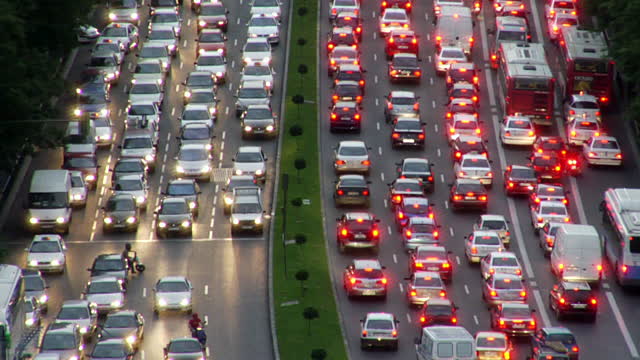
Two way streets are a funny thing. They are a cognitive assumption so ingrained into our natural understanding that we do not think of their malfunction. Cars blaze by each other on highways and interstates every day without much worry. Like referees in an NBA game, they do not demand much attention until something goes wrong. Then, after a car crosses the median late at night, their vulnerability can be gravely apparent.
In the past two weeks, I’ve come across two separate instances, totally independent of each other, where this two way street has broken down.
A car has crossed the median….Drastic action will likely ensue.
But the biggest problem (and difference with highway traffic) with this two way street between the organization and its employees is the breakdown is normally invisible. The employee may be heading out the front door, and leadership is going to feel blindsided as the door hits them in the face.
The job of leadership is to knock over the walls that separate the bottom of the pyramid (remember…that is the foundation) and the top, and prevent these invisible accidents that normally only one side recognizes. Today, I am currently smack dab in the middle of our professional staffing ladder. I’m an audit manager in a CPA firm. In this role, I split time with senior management and ownership on one side, and in trenches with staff and senior staff producing our work on the other. I consider this wall that can implant itself between the two one of my primary responsibilities. I am the communication line that can prevent an unwanted departure, a stupid move that could undermine team members, or defend a tough position that had to be taken by top leadership. I am in a rare spot. I have the keys to both doors to see each side.
Both aforementioned instances where the two way street has broken down are most likely a result of lack of infrastructure, process, culture, or a combination of these factors. These three factors will be the subject of Part II of The Two Way Street, but the most important thing to remember for now is try to recognize and understand where these walls may be up in your organization. This is where the empathy of your organization’s leaders will come to light. This is the area where your culture will be defined and tested.
Obviously, this post has been pointed more towards the leadership perspective of the two way street and bringing up employees. Two reasons for this is when someone is not personally engaged on their own, their departure will be welcomed whether it be on their own accord or forced, and the other is if their disengagement is caused by management it is so hard to spot. There is no company immune to having an undesired departure because either management was not honest with the individual or leadership was not there doing enough to keep someone engaged. That difference can be really hard to recognize and harder to implement, but so necessary.
With that, start looking at your organization from the outside looking in. Where is your management team not being leaders? Where are staffers not being appreciated? Where are they not being pushed enough? In managing people assets, ensuring your two way street is running smoothly to get people to their destination quickly and safely as possible is imperative. Otherwise, a silent crash will take place right in front of you.


One thought on “The Two Way Street – Part I”